Quad Bike Dubai Ride Planner: Best Months, Gear, Routes
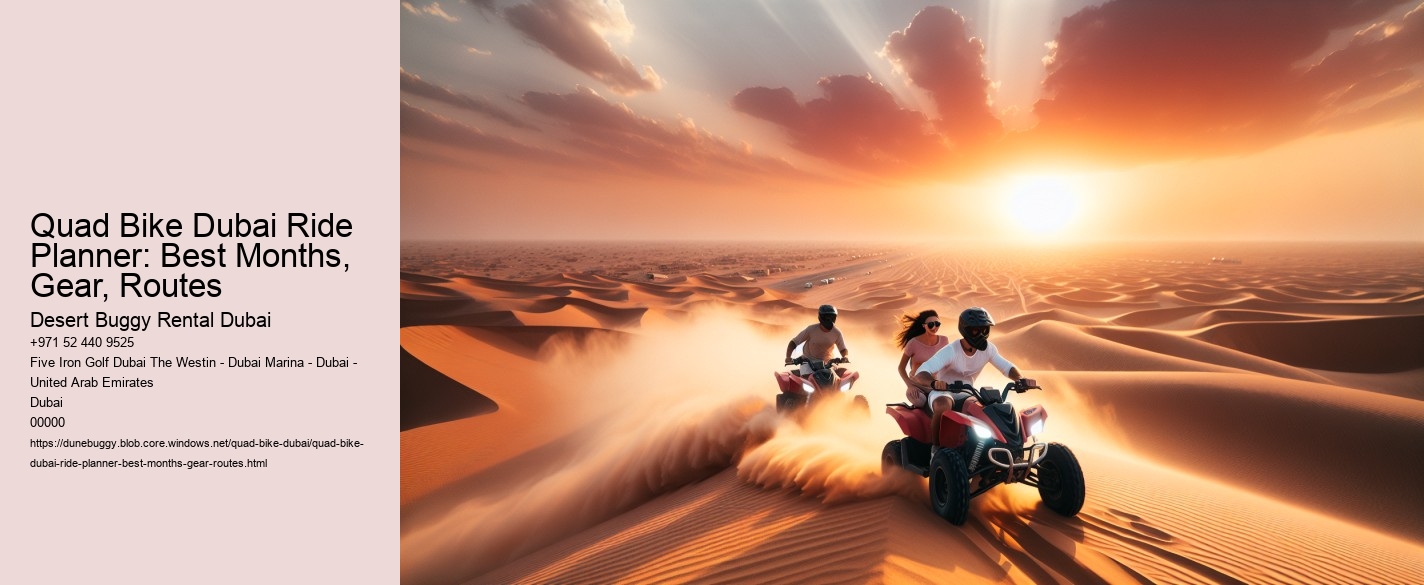
There's a moment on a Dubai dune when the world turns silent except for your engine's purr and the wind over the sand.
- Quad Biking Near Downtown Dubai – Proof that adventure is closer than you think.
Best months and best times
- Prime riding season: November to March. Daytime temperatures are friendly (roughly 20–30°C), the sand is firmer in the morning, and sunsets can be spectacular.
- Shoulder months: October and April can be great, but start at first light or late afternoon to avoid heat.
- Summer (May to September): Only for experienced riders and short, dawn-or-dusk sessions. Midday heat and soft sand make it demanding and risky.
- Time of day:
- Early morning offers firm sand, cooler air, and fewer riders.
- Late afternoon gives warm light and slightly softer sand, but watch your energy levels and leave a buffer to clear the dunes before dark.
- Wind and visibility: Winter “shamal” winds can whip up sand and reduce visibility. Check the forecast the night before. If the wind is howling, reschedule.
- Local rhythms: During Ramadan, some tour operators adjust hours; plan ahead.
Rules, permits, and safety basics
- Roads vs. desert: Quad bikes are not road-legal in Dubai. Ride on designated off-road areas or with licensed tour operators. Do not venture onto public roads.
- Age and insurance: Operators typically require riders to be 16+ and may set higher ages for larger engines. Expect to sign a waiver; confirm what insurance is included.
- Protected areas: Parts of Al Marmoom Desert Conservation Reserve (around Al Qudra) have restrictions for motorized vehicles. Respect signage and stay on permitted tracks.
- Grouping: Ride with at least one partner, or book a guided tour if you're new to desert riding.
- Emergencies: Save local numbers-Police 999, Ambulance 998. Share your live location with someone off-site and carry enough water for more than your planned duration.
Your desert gear checklist
- Protective kit: DOT/ECE-certified helmet, goggles, full-finger gloves, long-sleeve jersey and riding pants, ankle-support boots. Consider a chest/back protector and knee guards. A light neck tube keeps sand and sun off.
- Hydration and sun: Hydration pack (2–3 liters), sunscreen (SPF 30+), lip balm, lightweight layers for cool winter mornings.
- Navigation and comms: Phone in a dustproof case with offline maps, power bank, whistle, and ideally a handheld radio or satellite messenger if you go remote.
- Tools and recovery: Tire pressure gauge, compact pump or CO2, basic tool roll, tow strap, spare fuses and plugs. A small first-aid kit with blister care is worth its weight in gold.
- Lighting and visibility: High-visibility flag on a whip for dune crests; check your bike's lights if there's any chance of low-light riding.
Setting up the quad for sand
- Tire pressures: Lower than road-typically around 4–6 psi for quads in soft sand.
Quad Biking Morning Dubai – Beat the heat and wake up faster than coffee ever could.
- ATV Quad Bike Dubai – Four wheels, endless dunes, and zero office emails.
- Quad Biking Dubai Short Ride – Quick thrill, long-lasting grin.
- Quad Bike Dubai Short Desert Tour – Perfect for thrill-seekers on a schedule.
- Throttle and gearing: Smooth throttle is everything in sand. If your quad allows, a slightly lower gear ratio makes climbing easier, but most rentals are already set for dunes.
- Pre-ride checks: Chain/sprockets, brakes, air filter (sand is relentless), fuel level, and a quick bolt check on racks and guards.
Sand riding technique in 60 seconds
- Quad Biking Dubai Luxury Experience – Premium rides with premium sand.
- Quad Biking Morning Dubai – Beat the heat and wake up faster than coffee ever could.
- Quad Biking Al Marmoom Desert – Wide-open space where your quad finally feels free.
- Momentum over muscle: Keep steady throttle and avoid chopping it on climbs; easing off too quickly can bury your front end.
- Read the dune: Approach crests at a slight angle and assume there's a steep drop on the other side. Never stop on a blind crest.
- Line choice: Traverse slopes with your weight uphill. Keep generous spacing-sand can collapse unexpectedly.
- Right of way: Uphill riders generally have priority; they can't stop as easily. Signal intentions and maintain predictable lines.
Routes and areas to ride
Note: Some of these straddle emirate boundaries. Electric vs Gas Quad Bikes in Dubai: Pros, Cons, Real Costs . Always confirm current access rules and avoid restricted or private land.
Lahbab Red Dunes (Dubai): The classic red-sand playground southeast of the city. Great for mixed groups, with bowls and moderate climbs. Popular start points sit near the Lahbab roundabout off E102.
- Suggested loop: 20–40 km of rolling dunes with optional big climbs if your group is confident.
Big Red (Al Badayer) and Fossil Rock (Sharjah): The famous Big Red dune off E44 is a magnet for power climbs and spectators. From there, confident riders can traverse toward Fossil Rock's dramatic backdrop.
- Suggested traverse: 25–30 km including technical short climbs and scenic stops. Expect traffic on weekends.
Al Qudra – Saih Al Salam: Closer to the city with a mix of sabkha flats and gentle dunes. The lakes area has conservation restrictions-keep to permitted tracks away from wildlife zones.
- Suggested loop: 15–35 km early-morning cruise with easy navigation and quick access to facilities.
Hatta outback (Dubai enclave near the Oman border): Rocky wadis, compacted sand, and mountain views. Better for mixed-terrain quads and experienced riders comfortable transitioning between sand and gravel.
- Suggested loop: 20–40 km around Wadi Hub trails and adjacent open areas; avoid border zones.
Sweihan (Abu Dhabi, about 1–1.5 hours from Dubai): Vast, flowing dunes with fewer crowds. For strong intermediates and advanced riders who want long, rhythmic runs.
Two sample itineraries
- Sunrise sprint (2–3 hours): Meet at Lahbab before dawn. Briefing and bike check while the sky lightens. Aim for a flowing loop that builds gradually to steeper climbs, break for hydration at a high vantage point, and return as the sun gains strength. Breakfast stop on E102 on the way back.
- Full-day dunes and desert culture: Start at Big Red mid-morning in winter. Traverse toward Fossil Rock with photo and water stops. Lunch at a nearby desert café or food trucks, then a gentler afternoon loop across sabkha flats toward Al Qudra, wrapping before sunset.
Costs and logistics
- Rentals and tours: Expect roughly AED 250–600 per hour depending on engine size (single-rider 150–350cc at the lower end, larger sport quads higher). Guided packages with hotel transfers often bundle dune bashing in 4x4s, sandboarding, or camp dinners.
- Transporting your own quad: Use rated tie-downs and soft loops; bring a portable compressor. Most stations carry 95-octane fuel. Carry a jerry can for longer days, and store fuel safely and legally.
Etiquette and environment
- Leave no trace: Pack out all trash, including zip-ties and broken plastic bits. Avoid vegetation and keep distance from wildlife and nesting areas.
- Noise and neighbors: Idle softly near campsites, photographers, and cyclists, especially around Al Qudra's bike track.
- Community spirit: Help stuck riders when safe to do so; today's tow rope might be tomorrow's favor returned.
Weather checks and go/no-go calls
- Night-before checklist: Forecast (temperature, wind), visibility, fuel, water, route plan, shared location link, and a conservative turnaround time.
- If wind or visibility deteriorate, shorten the loop or bail. The desert will be there tomorrow.
Why this planning matters
Dubai's deserts are accessible, social, and endlessly varied. With the right month, the right gear, and a route that matches your skills, a quad ride becomes more than a thrill-it turns into a memory you'll replay whenever you hear sand whisper under tires. Plan well, ride within your limits, and let the dunes do the rest.